
LIFELONG LEARNING
Lifelong learning is not simply the pursuit of new knowledge; it is an orientation toward living that keeps the psyche engaged, responsive, and evolving. Rooted in curiosity and reflective practice, lifelong learning invites individuals to remain in an active relationship with lived-embodied experience—questioning assumptions, integrating insight, and refining presence over time. It is less about the accumulation of information and more about the cultivation: of awareness, discernment, and depth.
Lifelong Learning Programs
Programs grounded in mind-body practices engage the whole person—learn, explore, move and transform!
Exploring and Engaging Life Through Psychology and Movement
At its core, lifelong learning recognizes that development does not end with formal education or professional training. Instead, learning continues through lived experience, relational encounters, creative inquiry, and moments of disruption that invite re-organization. This orientation supports psychological flexibility, ethical maturity, and the capacity to meet complexity with nuance rather than certainty.
Lifelong learning as we understand it is embodied. It acknowledges that learning occurs not only through cognition, but through sensation, movement, affect, image, and imagination. The body becomes a site of knowing, carrying implicit memory, instinctual intelligence, and emotional truth. When learning is embodied, it supports nervous system regulation, attunement, and a deeper integration of insight into daily life.
Relationally, lifelong learning unfolds in dialogue—with teachers, peers, communities, and the broader cultural field. Learning is shaped by participation and reflection, by being seen and challenged, by co-creating meaning rather than passively receiving information. This relational dimension sustains vitality and guards against stagnation, isolation, and burnout.
Over time, lifelong learning shifts in tone. Early phases may emphasize skill-building and competence, while later phases invite integration, synthesis, and meaning-making. Learning becomes less linear and more cyclical, returning to familiar themes with greater depth and perspective. This developmental arc prepares the ground for a richer engagement with creativity, imagination, and legacy.
Ultimately, lifelong learning is a commitment to staying alive to experience—to remain teachable, permeable, and responsive across the lifespan. It fosters the inner conditions necessary for adaptation, ethical presence, and sustained engagement with self, others, and the world.
An Orientation Toward Ongoing Learning
Creative Aging
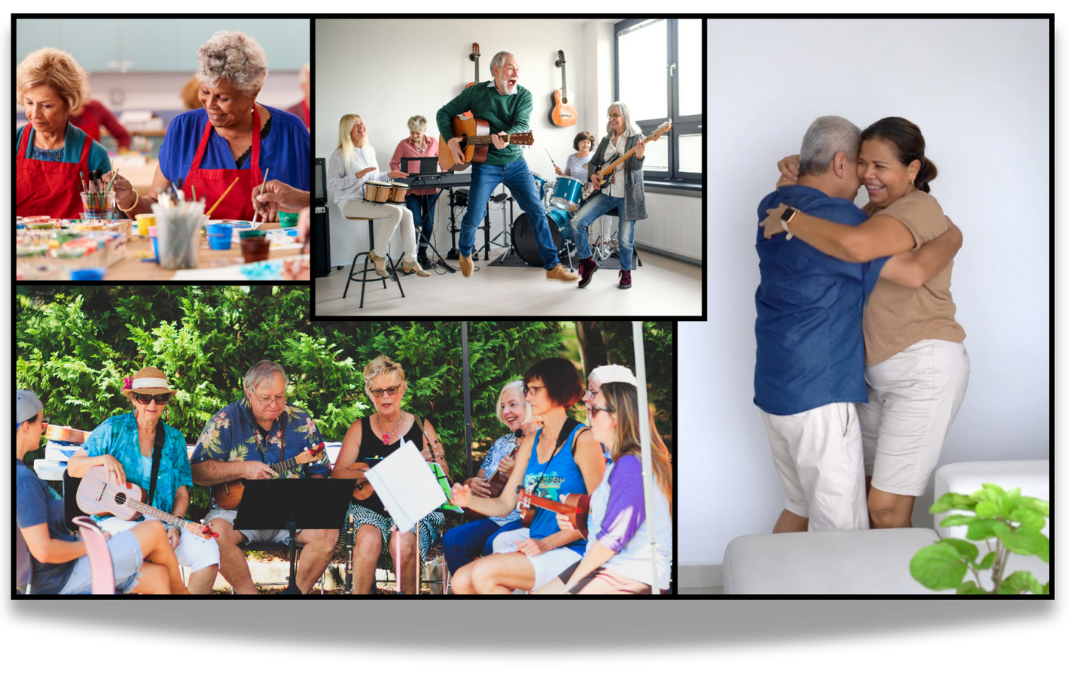
Creative aging is an approach to later life that centers creativity, learning, and engagement as essential ingredients of health and well-being. It recognizes aging as an active developmental stage rather than a period defined solely by decline.
By reframing later life as a time of continued growth, vitality, and contribution, creative aging moves away from a degenerative model and toward an integrative way of being in the world.
When learning remains embodied and alive, it becomes a powerful, generative source, for creative aging.
As individuals age, creativity becomes a primary language through which learning continues—integrating body, psyche, memory, and imagination.
In practice, creative aging is supported through engagement in the arts and embodied practices such as music-making and dance.
Core Elements of Creative Aging:
- Lifelong creativity: Engaging imagination and self-expression at any age
- Neurocognitive health: Supporting brain plasticity, memory, and attention through creative engagement
- Emotional & relational well-being: Enhancing connection, identity, and purpose
- Embodiment: Using movement, dance, rhythm, and sensory awareness to stay connected to the body
- Community & belonging: Reducing isolation through shared creative experiences
- Meaning & legacy: Reflecting on life experience and shaping how one wishes to contribute or be remembered
When Movement becomes Medicine
What Argentine Tango Can Teach Us About Well-Being Across the Lifespan
A growing body of research suggests that Argentine Tango, often seen as an art form rather than “exercise”, may quietly offer powerful benefits for both body and mind, especially as we age.
At its core, tango is:
- Relational – awareness extends beyond the self
- Improvisational – responsiveness replaces rigid control
- Embodied – sensation, timing, and presence matter
- Emotionally resonant – movement is infused with meaning
You don’t need to dance tango to access these benefits. Beneath the music and movement of tango lies something far more universal: a set of embodied principles that support physical health, emotional resilience, cognitive vitality, and a deeper sense of connection across the lifespan.
This course speaks directly to this unseen layer—translating tango’s embodied wisdom into practices that feel safe, accessible, and relevant for people who may never dance, but deeply need what tango teaches. These same principles can be practiced through simple, intentional embodied exercises—without ever dancing a single step.
Sometimes the most powerful interventions don’t look like interventions at all. They feel like experiences that quietly enhance the quality of our lives.
A Program Designed for
Creative Aging
This online learning program is not a tango class.
It is an invitation into embodied insight—drawing from the wisdom embedded in tango.
This program translates this wisdom into an accessible, guided embodied practices that anyone can engage.
Begin Today!