A Way of Seeing
Modern life has artificially separated what was never meant to be divided. My work is shaped by bringing together mind and body, science and imagination, movement and stillness, self and other, therapist and person, human being and nature through exploring spaces where these worlds meet. work invites the whole person.
A Poiesis of Psychological, Philosophical and Creative Work
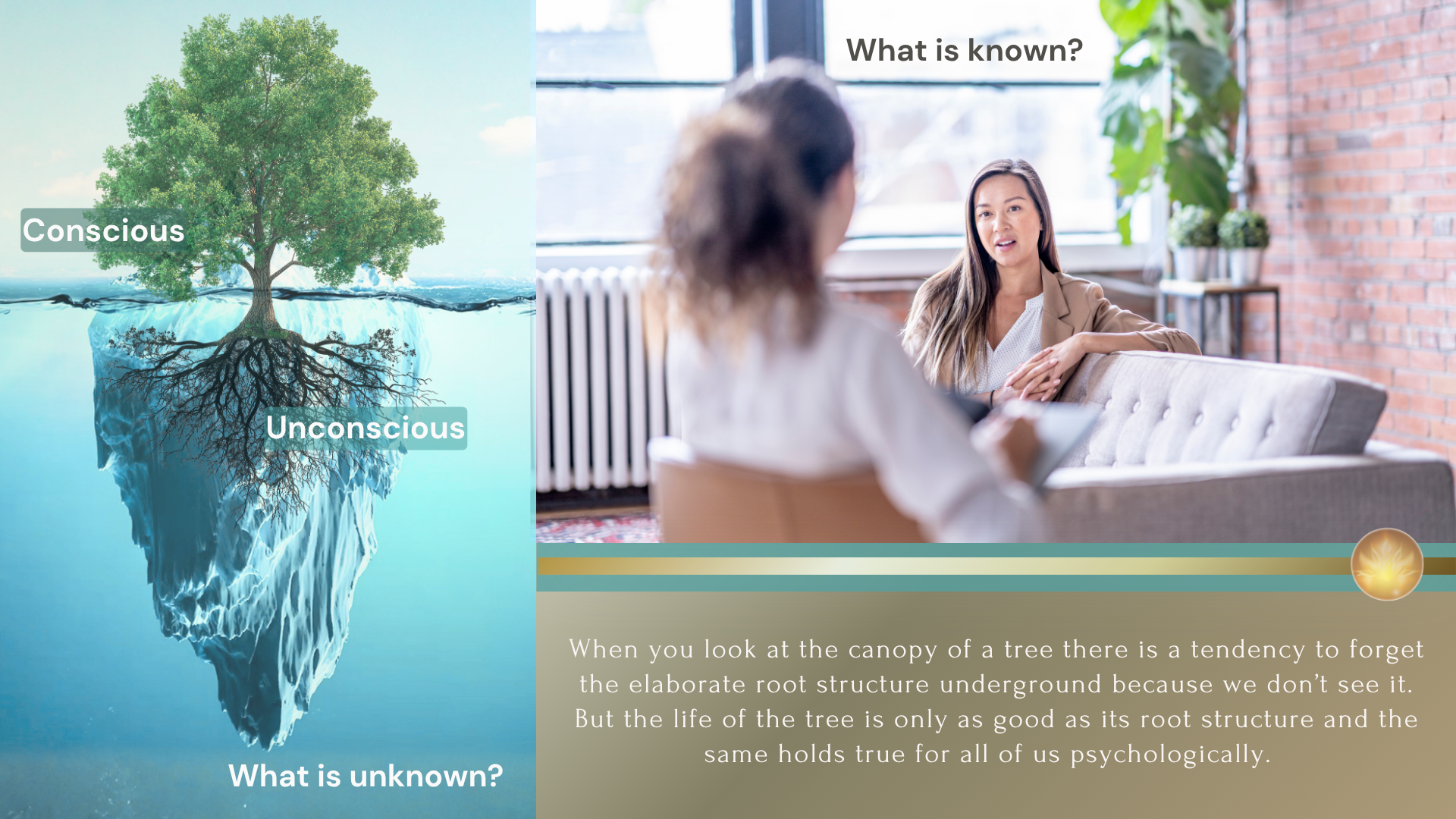
I have always been curious about exploring the in-between spaces, interested in connected everyday experiences to deeper meaning, and exploring the bridges between what is known and what we are still discovering.
If there is a single purpose that unites my work, it is this:
To create spaces where people can encounter themselves more honestly, relate to others more deeply, and discover that what they have been seeking can be found through their own lived-experience.
Before becoming a therapist, I spent many years as an artist. I worked with images, words, clay, metal, music, and movement. Through making art I learned that you have to pay attention, stay curious, work with what is actually in front of you, and sometimes let the material teach you. I have come to understand psychological work in much the same way.
My work is grounded in Depth Psychology and somatic experience, but at its heart it is about relationship. Relationship with ourselves, with our bodies, with other people, with the unconscious, and with the parts of life that cannot always be explained. Whether I am sitting with someone in therapy or working with a clinician who wants to deepen their practice, I am interested in creating a space where there is room to slow down, wonder, feel, create, and discover. I believe depth is not about having all the answers. It is about supporting a meeting place between that which is known or discovered through inquiry and the perennial mysteries of life that may always remain unknown.
Art Making
I have always loved working with my hands, making something out of what is in front of me and seeing where the process takes me. I have created large and small pieces of art for commercial projects, private collections, and to engage a deeply personal process. Some of my more recent mixed media work has been published through Litmosphere, and I continue to work with clay, metal, paper, paint, and whatever medium calls for attention. There is something deeply satisfying about allowing space for something unknown to emerge and since art elicits other senses in ways that verbal interventions cannot, the capacity of art making plays a positive role in healing the mind, body and spirit. Making art has also taught me that the creative process is uncertain, sometimes messy, and rarely straightforward, but also where something new begins to take shape.
The most meaningful and effective therapy is often creative. It is flexible and changes as the person and the relationship change. Rather than following a fixed formula, therapy makes room for new ideas, perspectives, and possibilities to emerge along the way.
This way of seeing has become part of how I work with others. I do not believe everything needs to be understood immediately or neatly put into words. Sometimes we need to sit with the fragments for a while. We need to notice what draws our attention, what keeps returning, what feels out of place, and what wants to be brought closer. In this sense, art making and psychological work are surprisingly related. Both ask for curiosity, patience, presence, and a willingness to let something reveal itself rather than forcing it into existence.
Cultivating the Capacities That Sustain the Work
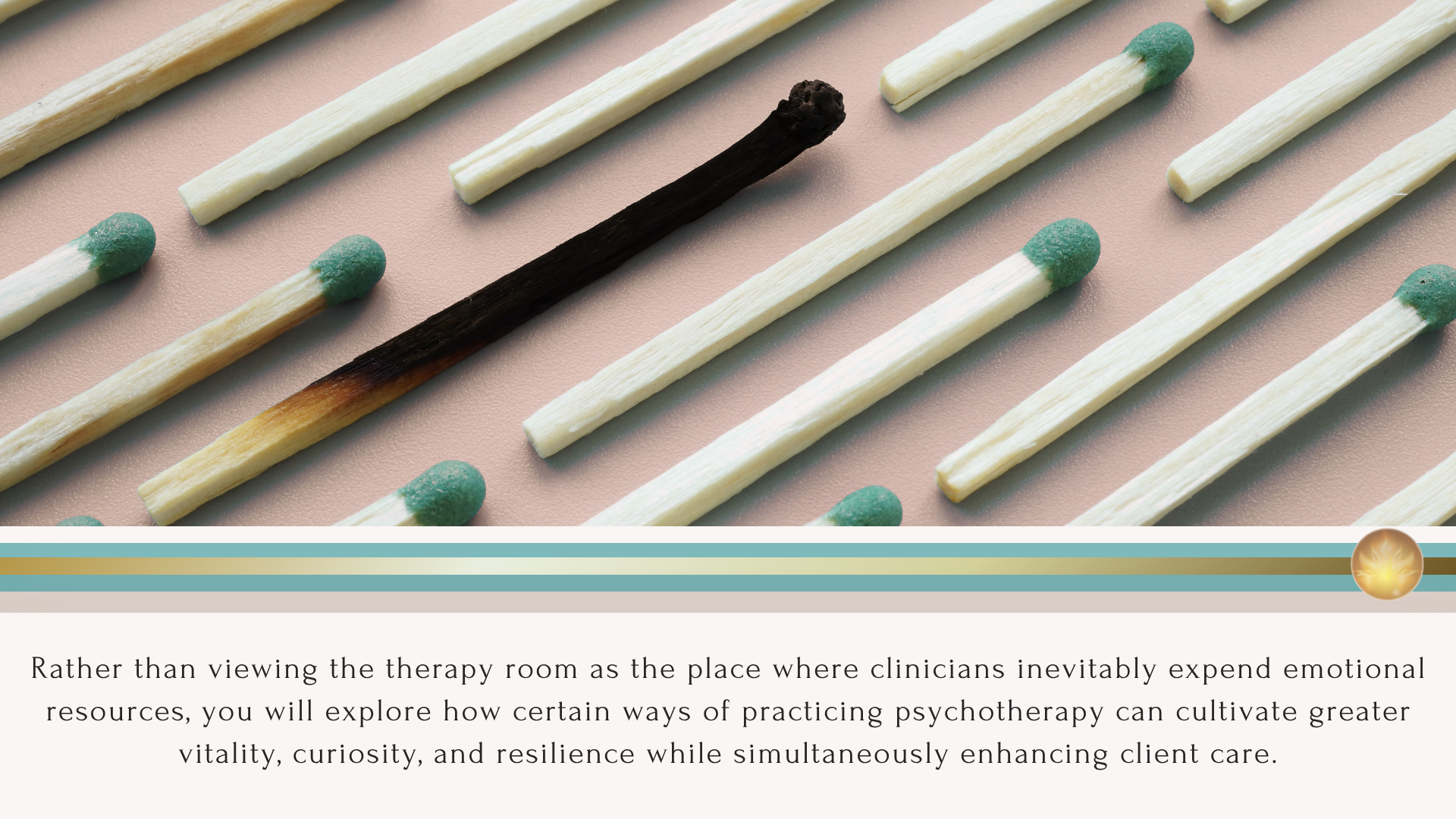
Rather than approaching professional wellbeing solely through the lens of burnout prevention, this work asks what helps clinicians remain vital within their profession.
Together, we explore capacities such as:

Creativity & Spontaneity
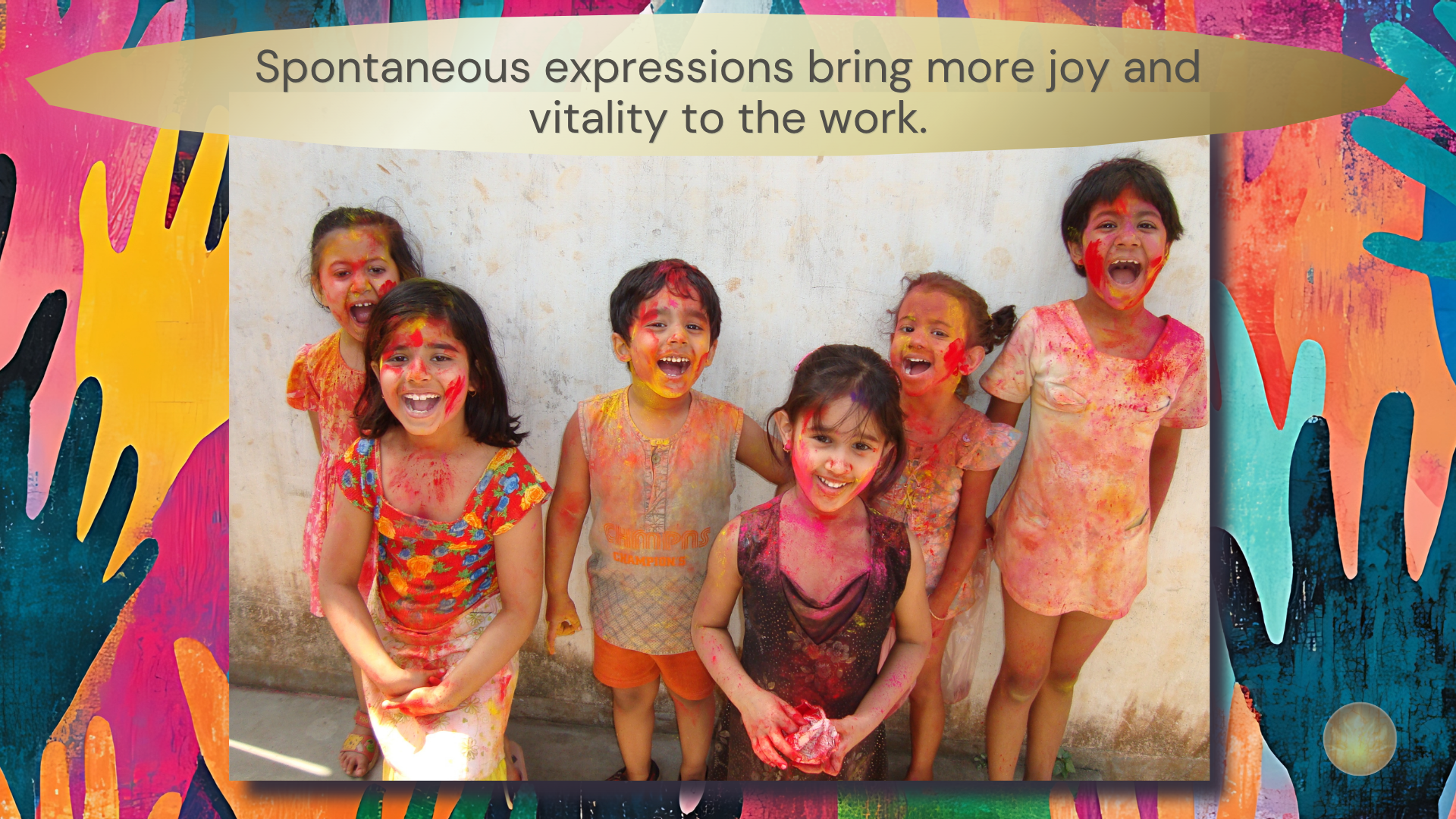
Through nurturing your imaginative and creative capacities you will access greater spontaneity and enhance your ability to approach familiar situations in new ways.
Presence & Relationships
Embodied presence supports a greater awareness of how we connect and attune to others while also remaining grounded and centered in your own being.
Meaning & Vitality
Engaging an inner process cultivates a renewed sense of aliveness in the work, deepens meaningful exchanges in the therapeutic setting and nourishes your personal life.
The clinician is part of the work.
Our bodies enter the room. Our histories enter the room. Our assumptions, instincts, emotions, imagination, and capacity for presence enter the room. So does our fatigue. So does our curiosity. So does our aliveness.
The quality of our professional lives is therefore inseparable from the quality of our relationship with ourselves.
Caring for the inner life of the clinician is not an indulgence separate from clinical practice. It is part of work and supports the therapeutic alliance.
Specialized Experiential Inquiries
6 Sessions: Private One-to-One Professional Development
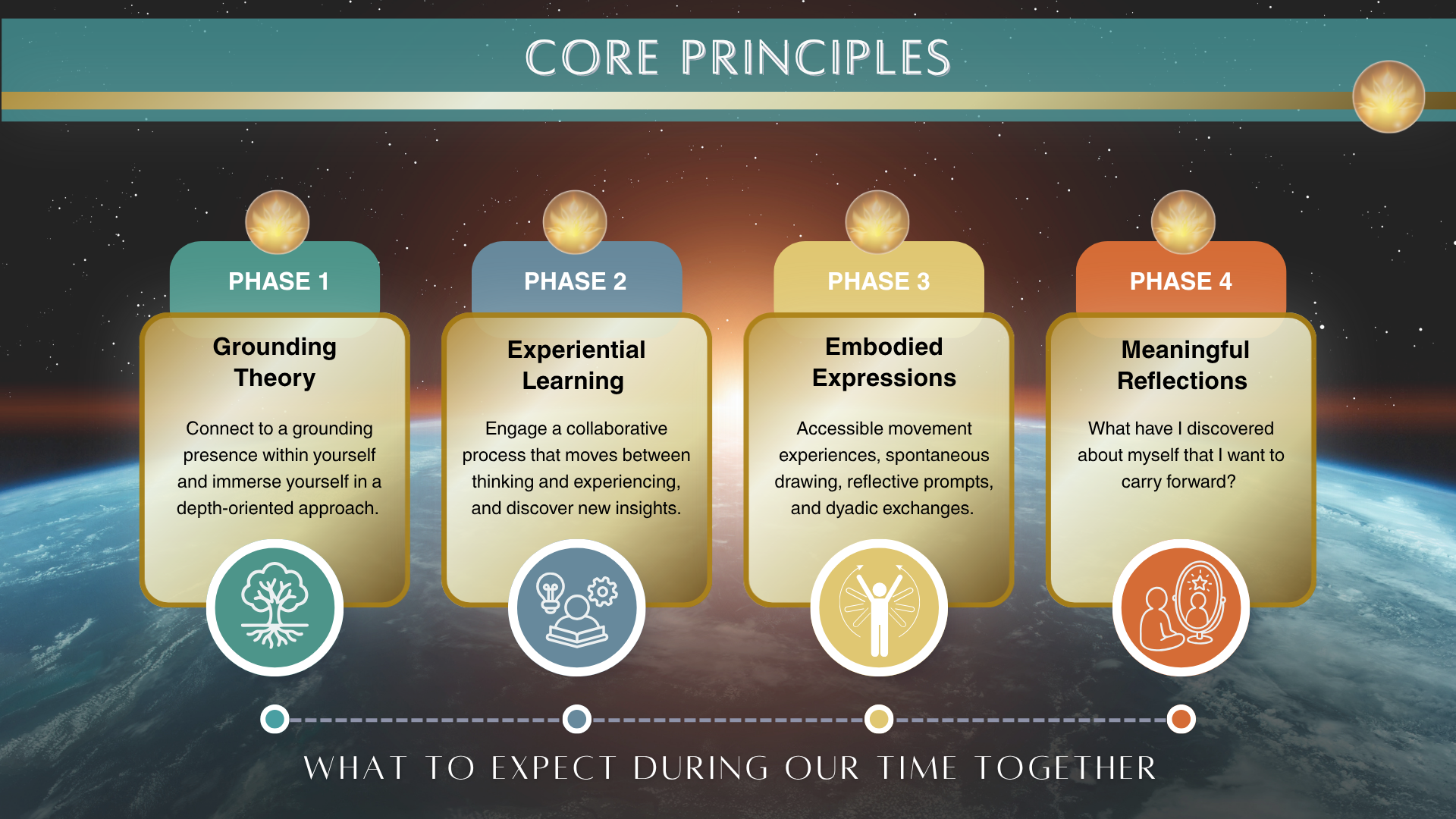
We often think of professional development as acquiring more knowledge, learning another technique, or adding another credential. These things matter. But clinical practice asks something of us that cannot be learned solely through intellectual knowledge. It asks us to be present, embodied, curious, and willing to engage our own inner experience.
Depth Oriented Inquiry, Embodied Experience and Creative Expression
From Experience Into Clinical Practice
Selected Areas of Professional Interest and Personal Discovery
Experiential Professional Development
Becomes an opportunity to pause, listen inwardly, become curious about what is emerging, and rediscover parts of ourselves that may have become quiet beneath the demands of professional life.
A Different Kind of Professional Development
We live in a world overflowing with information but often lacking spaces for reflection. These offerings are an invitation to slow down and explore the deeper currents beneath clinical work and everyday experience.
You may find yourself here if:
- You love your work but sometimes feel depleted by it.
- You want professional development that engages more than your intellect.
- You are curious about the relationship between your inner life and your professional practice.
- You want to reconnect with your own creativity, or bring more spontaneity and playfulness into your work.
- You are interested in embodiment and the wisdom of the body.
- You recognize that your own development is inseparable from your clinical work.
- You are seeking a more sustainable relationship with your profession.
- You want to remain human while becoming more professionally capable—not professionally capable at the expense of being human.